
Sun protection is not about getting a tan; it’s about the biological safety of your skin. Type A ultraviolet rays (UVA) penetrate clouds and glass 365 days a year, causing deep structural damage to the skin.
In modern cosmetology and dermatology, there is a key term — photoaging. This refers to the premature aging of the skin caused by systematic exposure to ultraviolet radiation. Unfortunately, many still believe that sunscreen is merely a seasonal product meant strictly for the beach. In this article, our expert Vira Norenko, a certified nutritionist and valeologist with a medical background, debunks this dangerous myth and answers other crucial questions.
- Why is SPF protection essential in winter and on cloudy days?
- What is the fundamental difference between UVA and UVB rays?
- How does SPF cream affect the natural synthesis of vitamin D in the body?
- Physical vs. organic filters: which type of sun protection should you choose for your skin?
- Can a full-fledged SPF cream be replaced with a foundation containing sun protection?
- How to properly apply, reapply, and cleanse SPF products throughout the day?
- Which internal nutraceuticals and antioxidants help protect the skin from within?
THE PHYSICS AND BIOCHEMISTRY OF LIGHT: Why the sun is dangerous even on cloudy days
To understand why SPF is necessary year-round, let’s look at the spectrum of solar radiation that reaches the Earth's surface.
-
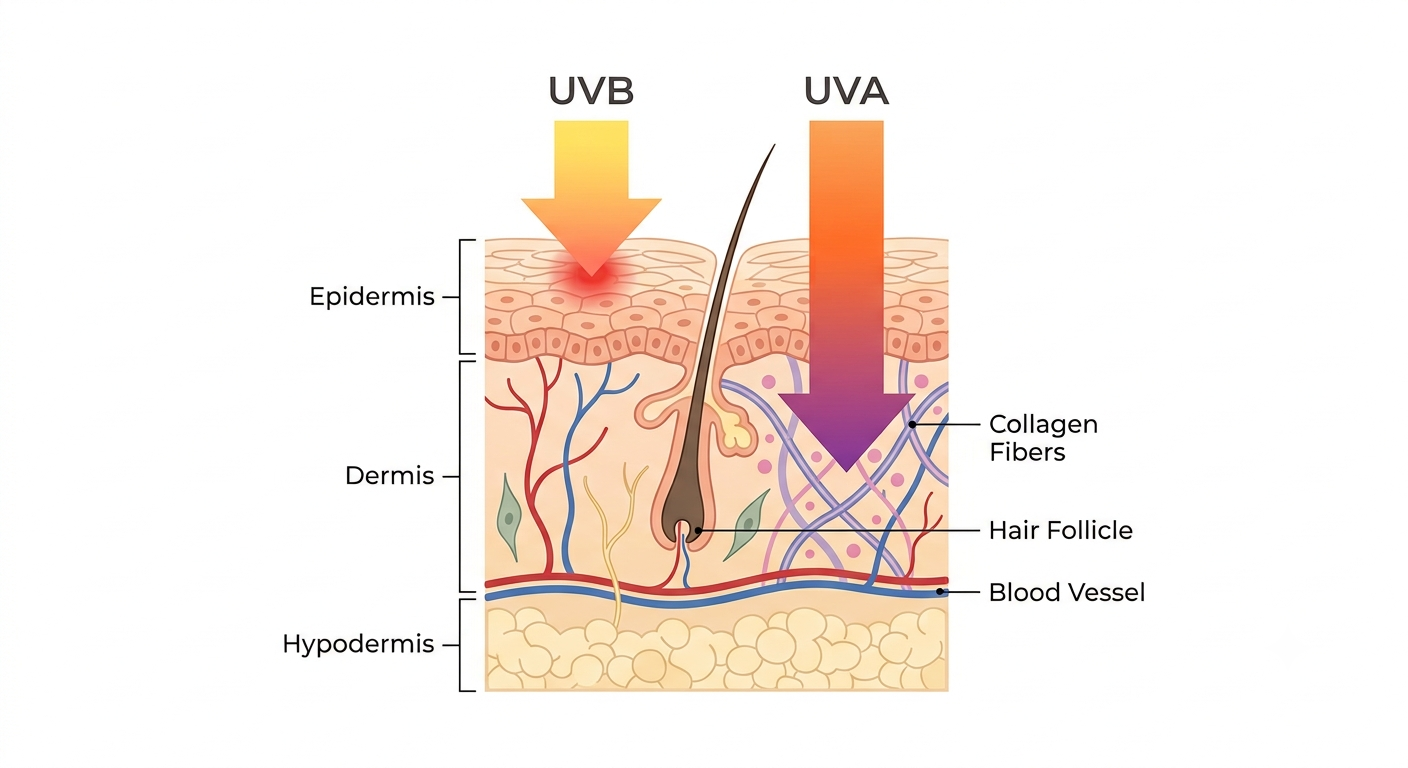
UVB Rays (Medium wave). These rays have a short wavelength. They penetrate only the uppermost layer of the skin — the epidermis.
-
When active: Primarily in spring and summer, during peak hours (from 11:00 AM to 4:00 PM).
-
Effects: Sunburns, redness, direct tanning, and an increased risk of melanoma.
-
Key feature: They do not penetrate clouds or window glass.
-
-
UVA Rays (Long wave). These have a long wavelength and account for 95% of all ultraviolet light reaching Earth.
-
When active: Year-round, from dawn to dusk, regardless of weather, wind speed, or temperature.
-
Effects: They painlessly penetrate into the deep layers of the dermis, where they destroy collagen and elastin fibers, stimulate free radical production, and trigger deep pigmentation.
-
Key feature: They easily pass through clouds, fog, car windows, and building glass.
-
What does this mean for our skin in practice?
The main catch lies in the nature of UVA rays. While UVB rays make themselves known immediately — through redness, burns, and pain — UVA rays act completely painlessly and imperceptibly.
They pass through office windows, car windshields, and the dense winter cloud cover. Penetrating deep into the dermis, UVA rays do not cause sunburn, but day after day they degrade collagen molecules, induce glycation (the cross-linking of protein fibers), and launch free radical cascades. Research confirms that chronic UVA exposure is the primary trigger for premature skin aging and the breakdown of the dermal extracellular matrix.
Simply put: UVB rays determine whether you get burned at the beach today, while UVA rays dictate how your face will look in 5–10 years. That is why relying solely on whether it's bright and sunny outside is the single biggest mistake in skin care.
WHY SPF IS NEEDED IN EVERY SEASON: A Seasonal Breakdown
According to WHO recommendations, if the UV index is 3 or higher, using sunscreen is mandatory! You can easily check the UV Index in your smartphone's weather app.
Summer: Maximum intensity and a double hit. In summer, the skin is attacked by two types of rays at once — UVA and UVB.
-
Risks: Sunburns, dehydration, photodermatitis, thickening of the stratum corneum (hyperkeratosis), and the appearance of new pigment spots.
-
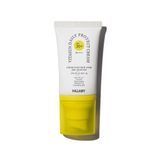
What to choose: Products with SPF 50+ and a water-resistant formula. It is important to account for high temperatures and sweating by opting for lightweight creams, fluids, or emulsions that do not clog pores.
Autumn: A period of recovery and high vulnerability. Although temperatures drop in autumn, UVA rays remain at high levels.
-
Risks: Autumn is when active skincare routines typically begin — peels, retinol, and acids (AHAs, BHAs). These ingredients thin the stratum corneum, leaving the skin defenseless against solar radiation.
-
What to choose: SPF 30+ enriched with antioxidants (Vitamin C, Vitamin E, green tea) to help restore the skin barrier.
Winter: The snow trap and reflection. It is a mistake to assume that freezing temperatures protect against sun exposure.
-
Risks: Fresh snow and ice reflect up to 80% of UV rays, creating a "double exposure" effect. At mountain ski resorts, UV intensity increases by 10–12% with every 1,000 meters of altitude.
-
What to choose: Creams with SPF 30+ and ceramides, which protect not only from photoaging but also from cold windburn.
Spring: The sun's awakening and skin reactivity. After a winter deficit of light, the skin has reduced levels of its own protective pigment (melanin).
-
Risks: The first spring rays can cause sudden flare-ups of pigmentation, allergic reactions, and exacerbation of rosacea.
-
What to choose: Transitioning back to SPF 30–50+.
IMPORTANT: Does SPF cream block Vitamin D synthesis?
This is one of the most common fears among those trying to maintain a healthy level of the "sunshine vitamin". However, human physiology works somewhat differently. Studies show that Vitamin D synthesis in the skin is triggered by UVB rays. No sunscreen — even with SPF 50+ — blocks 100% of ultraviolet rays (SPF 50 lets in about 2% of rays, and SPF 30 about 3%). This trace amount of radiation is more than enough to trigger natural synthesis.
Furthermore, to obtain the daily requirement of Vitamin D, it is enough to spend just 10–15 minutes a day in the sun with your hands and forearms exposed. Applying SPF to the face is mandatory, as facial skin is the thinnest, most sensitive to photoaging, and most prone to hyperpigmentation.
PHYSICAL VS. ORGANIC FILTERS: How to choose your ideal sun protection?
When choosing a sunscreen, you will often see terms like "mineral," "organic," "chemical," or "hybrid" on the label. All of these fulfill one primary task — protecting your skin from ultraviolet radiation — but they do so using completely different principles.
Based on the type of active ingredients, all sun filters are divided into two main categories: physical (mineral) filters, which act on the surface of the skin, and organic (chemical) filters, which work in the upper layers of the epidermis. Therefore, choosing the right product depends on the specific needs you need to address.
Comparative Analysis of Sun Filters:
How to properly apply and remove SPF? Even the most expensive sunscreen will fail if applied incorrectly. Here are the golden rules of photoprotection:
-
The Two-Finger Rule: To cover your face and neck with the required amount of product (2 mg per 1 cm² of skin), squeeze two full strips of cream onto your index and middle fingers. This is your target dose.
-
Application Time: Apply sunscreen as the final step of your skincare routine 15–20 minutes before going outside (if using chemical filters).
-
Reapplication:
-
In an urban setting (with next-gen filters): If you remain indoors and only go outside for short periods, high-quality sun protection remains effective for up to 6–8 hours and does not require reapplication during the workday.
-
In direct sunlight (beach, sports, outdoor activities) or with older filters: Reapply every 2 hours of continuous sun exposure, as well as immediately after swimming, towel-drying, or excessive sweating.
-
-
Proper Cleansing: Evening SPF removal is mandatory! Use a two-step cleansing routine:
-
Step 1: Hydrophilic oil or a cleansing balm (to dissolve the UV filters).
-
Step 2: A gentle foaming cleanser or gel suitable for your skin type.
-
CAN A FOUNDATION WITH SPF BE A FULL REPLACEMENT? No. For any product (whether a cream or a foundation) to deliver the protection level stated on its packaging (e.g., SPF 30), it must be applied in a precisely measured amount — 2 mg per 1 cm² of skin. For the face, this equates to roughly 1.25 ml (or the two-finger rule).
Applying that amount of foundation would create a heavy, mask-like layer that looks unnatural and clogs pores. Typically, foundation is applied in a very sheer, thin layer (4 to 5 times less than the required amount). As a result, the actual protection you receive from a foundation labeled "SPF 30" is only around SPF 3–5, which is completely insufficient for defending against UVA rays and hyperpigmentation. The best approach is to apply your sunscreen first, wait 10–15 minutes, and then apply your foundation.
A COMPREHENSIVE APPROACH: Nutraceutical Support and Antioxidant Protection
Topical SPF creams work as a barrier that absorbs or reflects ultraviolet radiation. However, a portion of UV rays still penetrates the skin, triggering free radical formation and oxidative stress. To reduce this internal damage and support skin recovery, we rely on the body’s own antioxidant system, which can be strengthened from within.
IMPORTANT: Nutraceuticals do not replace sunscreen, but they work in synergy with it, minimizing the effects of sun exposure at the cellular level.
-
Antioxidant Complexes with Vitamins C and E:
Studies confirm that this is the classic and most powerful duo for protecting cells against oxidative stress. Vitamin C neutralizes aggressive free radicals that form massively under the influence of solar radiation, suppresses excessive melanin synthesis (preventing solar pigment spots), and is an essential cofactor for the body's own collagen production. Vitamin E works in synergy with Vitamin C: it protects cell lipid membranes from destruction and strengthens the skin's natural protective barrier. -
Green Tea Extract and Resveratrol:
Powerful natural polyphenols with pronounced photoprotective and anti-inflammatory properties. They block the destruction of cell membranes, protect the DNA of epidermal cells from UV-induced damage, and significantly reduce the risk of photodermatitis, redness, and allergic reactions to the sun. Furthermore, these components slow down the photoaging process and help maintain a healthy capillary network in the face (couperose prevention). -
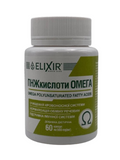
Concentrated Omega-3 Fatty Acid Complexes (EPA and DHA):
Omega-3s are a critically important element for maintaining the integrity of the skin's hydrolipidic barrier from within. This is supported by scientific data. These essential fatty acids are incorporated directly into the membranes of dermal and epidermal cells, preventing transepidermal water loss (negating summer dehydration and flaking). Omega-3s suppress inflammatory cascades, reduce skin sensitivity and reactivity to ultraviolet light, and protect collagen fibers from enzymatic breakdown, maintaining facial firmness and elasticity.
In conclusion, protection from ultraviolet radiation is not a temporary summer concern, but a daily investment in the youth, firmness, and health of your skin. By using SPF year-round, you prevent collagen destruction, maintain an even skin tone, and reduce the risk of dermatological diseases.
Scientific Basis of this Article:
About the Author:
Vira Norenko is a nutritionist with a medical background, and valeologist with over 10 years of experience. She specializes in integrative nutrition and restoring the body through plant-based supplements and diet.
This article was prepared by a specialist with a medical background for educational purposes. The information provided is not a substitute for professional medical advice.