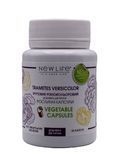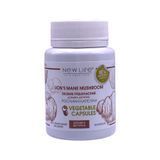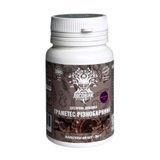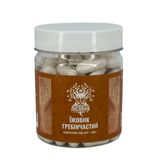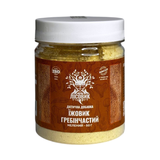

For millennia, traditional Eastern medicine categorized certain species of bracket fungi as "superior herbal remedies." Unlike ordinary culinary mushrooms, these species are potent bioactive complexes capable of gently retraining our immune system and stimulating self-healing.
Today, medicinal mushroom therapy (fungotherapy) is no longer just a component of traditional medicine. Thanks to thousands of biochemical studies, we know precisely how polysaccharides, beta-glucans, triterpenes, and hericenones act at the cellular level. In this article, Vira Norenko, a nutritionist with a medical background, breaks down three of the most powerful functional mushrooms — Turkey Tail (Trametes versicolor), Sanghuang (Phellinus linteus), and Lion's Mane (Hericium erinaceus). Specifically, you will learn:
BIOCHEMICAL FOUNDATION: Why Do Functional Mushrooms Work?
The key value of medicinal mushrooms lies in the fact that they act as immunomodulators rather than immunostimulants. They do not force an exhausted immune system to work to the point of depletion; instead, they regulate it: suppressing excessive inflammation and activating defenses where there is a deficit.
According to research, the foundation of their action lies in beta-1,3/1,6-glucans. These are specific complex carbohydrates recognized by receptors on our immune cells (macrophages, neutrophils, and natural killer cells — NK cells). When a beta-glucan binds to the Dectin-1 receptor on the surface of a macrophage, it acts as a "start button," triggering immune cells to actively seek out viruses, mutated cells, and pathogens.
TURKEY TAIL (TRAMETES VERSICOLOR): Guardian of Cellular Immunity
Turkey Tail (Trametes versicolor) is one of the most thoroughly researched functional mushrooms in global oncology and immunology. In Japan and China, standardized Turkey Tail extracts are officially incorporated into clinical protocols as an integrative supportive therapy in comprehensive cancer management.
Key Active Compounds:
-
Polysaccharopeptide PSK (Krestin): A protein-bound polysaccharide that restores T-lymphocyte function following aggressive pharmacotherapy.
-
Polysaccharopeptide PSP: Stimulates the production of interferons and cytokines, enhancing the immune system's recognition of foreign agents.
According to a summary review by the National Cancer Institute (NCI), the administration of PSK helps restore immune defense in patients undergoing chemotherapy, improving overall survival rates and quality of life.
Effects of Turkey Tail:
-
Support in Oncology Protocols: Reduces the side effects of chemotherapy and radiation therapy (nausea, fatigue, leukopenia).
-
Antiviral Defense: Effective in chronic viral infections (EBV, CMV, Human Papillomavirus / HPV).
-
Microbiome Health: Acts as a potent prebiotic, nourishing beneficial gut microbiota (Bifidobacterium and Lactobacillus).
SANGHUANG (PHELLINUS LINTEUS): Natural Antioxidant and Hepatoprotector
Sanghuang (Phellinus linteus) is a rare bracket fungus that naturally grows on mulberry trees. In Eastern tradition, it is referred to as the "golden mushroom" due to its pronounced anti-inflammatory, antioxidant, and protective properties.
Key Active Compounds:
-
Hispolon: A potent polyphenolic compound with strong antioxidant, anti-inflammatory, and protective properties.
-
Proteoglycans and Triterpenoids: Complex biopolymers that activate NK (natural killer) cells and protect cellular membranes from free-radical oxidation.
Effects of Sanghuang:
-
Hepatoprotection: Protects liver cells (hepatocytes) from toxic damage, alcohol-induced intoxication, and fatty liver disease (hepatic steatosis).
-
Chronic Inflammation Control: Suppresses inflammatory cytokines (TNF-α, IL-6), making it invaluable in autoimmune and chronic inflammatory conditions.
-
Anti-angiogenic Effect: Studies published in fundamental oncology literature demonstrate that active fractions of Phellinus linteus can block angiogenesis (the formation of new capillaries in tumor tissues), thereby slowing tumor proliferation.
LION'S MANE (HERICIUM ERINACEUS): Nootropic for Neuronal Regeneration
Lion's Mane (Hericium erinaceus) is a unique organic nootropic. Unlike synthetic stimulants, it does not "burn out" the nervous system, but instead stimulates its regeneration.
Key Active Compounds:
-
Hericenones (found in fruiting bodies).
-
Erinacines (found in mycelium).
These compounds readily cross the blood-brain barrier and stimulate the synthesis of NGF (Nerve Growth Factor) — a crucial protein responsible for the survival, development, and plasticity of neurons.
A randomized clinical trial demonstrated that regular consumption of Hericium erinaceus for 16 weeks significantly enhanced cognitive function and memory scores in individuals with mild cognitive impairment.
Effects of Lion's Mane:
SUMMARY: Dosage, Onset, and Comparative Analysis
When to expect results? Initial changes from Lion's Mane (mental clarity, focus) are often noticeable within 7–14 days. For the immunomodulatory effects of Turkey Tail and Sanghuang, a cumulative period of 4 to 12 weeks is required. Overall, the optimal primary course duration is 8–12 weeks, followed by a 2–3 week break. If necessary, several functional mushrooms can be combined simultaneously.
Furthermore, these mushrooms work in synergy. For instance, pairing Lion's Mane (brain and GI tract) with Turkey Tail (immunity and gut microbiome) provides comprehensive recovery after severe stress or illness.
To gain maximum therapeutic benefit from medicinal mushrooms, consider the quality and source of the product:
-
Choose extracts with guaranteed polysaccharide content (at least 30%).
-
Pay attention to the delivery form: Encapsulated forms ensure precise dosage and protect active compounds from gastric acid breakdown.
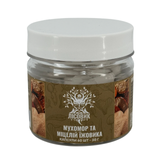
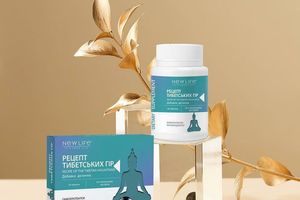
Our phytocenter offers verified, certified natural mushroom-based preparations produced via modern extraction technologies. For ease of reference, we have summarized the core properties in the table below:
Щоб отримати максимальну користь від фунготерапії, звертайте увагу на якість та сировину препарату:
| Mushroom | Key Active Compounds | Core Target Action | Optimal Application |
|---|---|---|---|
|
Turkey Tail |
Polysaccharides PSK, PSP, Beta-1,3/1,6-glucans | Immune modulation, antiviral protection, detox | Chemotherapy support, frequent colds, EBV, HPV, microbiome recovery |
| Sanghuang (Phellinus linteus) |
Hispolon, proteoglycans, triterpenoids, antioxidants | Liver protection, anti-inflammatory, vascular support | Chronic inflammation, hepatitis, integrative oncology protocols |
| Lion's Mane (Hericium erinaceus) |
Hericenones, Erinacines, Beta-glucans | NGF synthesis, nootropic effect, GI protection | Memory loss, brain fog, stress, gastritis, ulcers |
Scientific Basis of this Article:
- Evaluation of Immune Modulation by β-1,3; 1,6 D-Glucan Derived from Ganoderma lucidum in Healthy Adult Volunteers, A Randomized Controlled Trial.
-
Medicinal mushroom Phellinus linteus as an alternative cancer therapy.
About the Author:
Vira Norenko is a nutritionist with a medical background, and valeologist with over 10 years of experience. She specializes in integrative nutrition and restoring the body through plant-based supplements and diet.
This article was prepared by a specialist with a medical background for educational purposes. The information provided is not a substitute for professional medical advice.