 Discomfort, clicking, or stiffness in the knees, hip joints, or spine are often perceived as purely local issues. However, all processes in the body are interconnected, and glucosamine and chondroitin are among the key components supporting normal cartilage function and the joint environment. They are grouped under the name chondroprotectors and come in various forms, from capsules to gels and ointments. These are not just popular labels on packaging, but substances with a clear biological role, synthesis, and absorption.
To support joints in practice, it is important not only to choose the right form of a supplement, but also to understand how cartilage is structured and what prevents its cells from working at full capacity. That is why Vira Norenko, a nutritionist with a medical background, has examined the following questions in detail in this article:
- What are glucosamine and chondroitin, and how do they work in articular cartilage?
-
Why does mature cartilage lack its own blood vessels, and how do nutrients reach it?
-
Which factors accelerate cartilage breakdown and interfere with chondrocyte function?
-
Which products are best to choose for prevention and comprehensive joint support?
WHAT ARE GLUCOSAMINE AND CHONDROITIN: BIOCHEMICAL BASIS AND ROLE IN TISSUES
Talking about joints becomes much clearer when we look at cartilage tissue not as a passive "pad," but as a complex biomechanical system. Articular cartilage is roughly 65–80% water, yet it is also a dense, resilient tissue that withstands heavy loads every day during walking, running, climbing stairs, and similar movements. It does not spread out or break down after every step thanks to a combination of several key elements:
-
Collagen fibers form a strong supporting framework that holds the tissue's shape and keeps it from becoming shapeless under pressure.
-
Proteoglycans—large molecules with a protein core and glycosaminoglycan chains—retain moisture and provide elasticity and resistance to compression. One of these key components is chondroitin (chondroitin sulfate), whose charged groups help it interact with water.
-
Hyaluronic acid serves as a central backbone to which proteoglycan molecules (such as aggrecan) attach via specialized proteins, forming massive molecular complexes that retain moisture and support the properties of synovial fluid—and glucosamine takes part in building these structures.
Let us take a closer look at what glucosamine and chondroitin actually are.
-
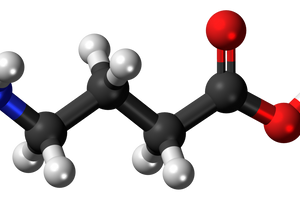
Glucosamine is an amino sugar, meaning a molecule related to ordinary sugars but with an attached amino group. The body can synthesize it on its own from glucose metabolism products and amino acids. It participates in building cartilage and connective tissue and is required to form hyaluronic acid. At the same time, having glucose in your diet does not mean "more sweets will give you more glucosamine"—production is regulated by the body itself and depends on proper metabolism.
-
Chondroitin (most often in the form of chondroitin sulfate) is one of the leading components of proteoglycans. Its negatively charged sulfate groups attract and hold water molecules, allowing cartilage to act like an elastic shock absorber: under load, fluid distributes the pressure, and once the load is removed, the tissue gradually returns to its original shape.
Speaking simply about how their functions divide within a shared system, glucosamine is more closely tied to synthesizing complex matrix molecules and hyaluronic acid, whereas chondroitin sulfate directly provides the elasticity and water-retaining capacity of the cartilage matrix. That is why they are often combined in practice: in most cases, the state of the synovial fluid and the state of the cartilage change in parallel rather than in isolation from one another.
IMPORTANT: Evidence that glucosamine and chondroitin can genuinely help joints is supported by large scientific reviews: an analysis of data from more than 15,000 people showed improvement in osteoarthritis, especially when these components are combined (most often using daily doses of around 1,500 mg of glucosamine and 800–1,200 mg of chondroitin in studies). At the same time, it is important not to expect miracles in a few days: results build up gradually over months and depend on the condition of the joint as well as how high-quality and suitable the chosen form of the substance is.
To sum up, let us review the key elements of cartilage, how they work, and what to pay attention to in practice:
| Component | Biological Nature | Primary Role in the Joint System | Practical Focus |
|---|---|---|---|
|
Glucosamine |
Amino sugar (synthesized from glucose and amino acids) | Building component of cartilage, connective tissue, and hyaluronic acid | Regulated by the body; well-functioning metabolism matters more than sugar intake |
| Chondroitin sulfate | Sulfated glycosaminoglycan within proteoglycans | Provides elasticity, shock absorption, and water retention in the cartilage matrix | Sulfate form and molecular characteristics of the product are critical |
| Hyaluronic acid | Linear polysaccharide | Central "backbone" of large proteoglycan complexes; retains moisture | Supports the viscosity and lubricating properties of synovial fluid |
| Collagen | Fibrillar protein | Creates a firm framework and support for cartilage tissue | Requires amino acids, vitamin C, and protection from excessive glycation |
| Chondrocytes | Specialized cartilage cells | Synthesize collagen and proteoglycans and maintain the matrix | Nourished mainly by diffusion; sensitive to inflammation, overload, and age |
CHONDROCYTES AND HOW CARTILAGE IS NOURISHED
To understand why glucosamine and chondroitin work only under certain conditions, it helps to look at the cells that build cartilage itself—chondrocytes.
According to research, mature articular cartilage does not have its own developed network of blood vessels. Unlike muscles or skin, where nutrients are delivered directly through capillaries, chondrocytes receive nourishment primarily through diffusion—the passive movement of molecules from an area of higher concentration to an area of lower concentration, mainly from the synovial fluid.
Imagine a clear teapot with a strainer inside, where you place tea leaves and pour in water. If you leave it completely still, saturation happens slowly and unevenly. When we gently stir or refresh the liquid, the exchange and distribution of substances speed up. A joint during movement works on roughly the same biomechanical principle: as cartilage is compressed and unloaded, fluid inside the tissue shifts, helping deliver nutrients and remove metabolic waste.
This leads to a key rule: joints need moderate, regular movement rather than uncontrolled overload or prolonged immobility. Even if a person spends a lot of time sitting or has limitations for long walks, brief breaks every hour for 5–10 minutes or simple movements of the feet or legs while lying down already create the micro-movement "stirring" the environment needs. After all, even the best nutrients must travel from digestion to cartilage tissue and distribute evenly within it.
If chondrocytes lack resources, they cannot properly build the matrix even when building components are supplied. Main causes of deterioration:
-
Age-related changes and cellular senescence. Over the years, chondrocyte activity can decline, and some cells enter a state of cellular aging—senescence—in which their signaling activity and ability to maintain matrix structure change.
-
Past and current injuries. Damage to the menisci, ligaments, or other structures alters the joint's biomechanics. Even after healing, a shifted load distribution can long make itself felt by overloading specific areas of cartilage.
-
Excess body weight. Extra kilograms mean more than mechanical pressure on the knee, hip joints, or spine. Adipose tissue is metabolically and endocrinologically active, so it releases signaling molecules that can sustain low-grade inflammation and metabolic disturbances.
-
Carbohydrate metabolism disorders and glycation. Long-term elevated glucose levels intensify glycation processes, leading to the formation of advanced glycation end-products. These can alter the properties of collagen and reduce the elasticity of connective tissue structures in the joint.
-
Inflammatory processes. A moderate inflammatory response is needed by the body for protection and repair, but when inflammation becomes chronic and excessive, enzymes that break down components of the cartilage matrix are activated. When breakdown processes begin to outweigh synthesis, the structure of the cartilage gradually changes.
HOW DIGESTION AND THE PANCREAS AFFECT THE ABSORPTION OF GLUCOSAMINE AND CHONDROITIN
Even the highest-quality glucosamine or chondroitin will work only if it successfully passes through the digestive system and reaches the joint tissues. A capsule is easy to swallow, but if the gastrointestinal tract is functioning with disruptions, most of the active substances will not be absorbed or will not be able to take part in cartilage repair. For chondroprotectors to bring real benefit, two digestive links must work in coordination:
1. Direct absorption of the supplements themselves: mucosal condition and microbiota. Different components make their way through the gut in different ways:
-
Glucosamine has a relatively small molecule, so it is absorbed mainly in the small intestine. However, if its mucous membrane is inflamed or irritated, barrier and absorptive functions are impaired—part of the substance is simply lost in transit.
-
Chondroitin sulfate is a large, complex molecule that human enzymes cannot break down on their own. Here, beneficial gut microbiota (specifically Bacteroides) step in. It is these bacteria that break large biopolymers down into smaller fragments the body can absorb. If the microbiota is depleted, the bioavailability of chondroitin drops sharply.
2. The overall "construction workshop": pancreas, liver, and gallbladder. Getting into the bloodstream is only half the battle. For cartilage cells (chondrocytes) to use glucosamine and chondroitin to synthesize new matrix, they need a foundation: amino acids from proteins, vitamins, minerals, and energy. Breaking these down is the job of the stomach, the pancreas (which secretes the main digestive enzymes), and the liver with the gallbladder (which support the absorption of fat-soluble vitamins and gut motility). If the enzymatic activity of the pancreas is reduced, the body is short on basic "building material"—and targeted supplements simply do not have enough to build on.
IMPORTANT: Research shows that in people with non-traumatic joint issues (arthrosis, coxarthrosis), the first accompanying signals are often hidden digestive disruptions—weak enzymatic function of the pancreas or impaired bile flow. As long as basic nutrient absorption is slowed down, cartilage tissue repair proceeds very slowly.
What to pay attention to first:
-
Look broader than just the joint: assess overall digestion (whether there is heaviness after meals, bloating, or irregular bowel movements).
-
Check key GI organs: pay attention to the condition of the stomach and intestinal lining, the enzymatic function of the pancreas, and the work of the liver and gallbladder.
-
Support your microbiota and diet: ensure sufficient protein and fiber in your diet so the body has both the "bricks" to synthesize matrix and healthy microflora to absorb complex molecules.
RECOVERY STRATEGY AND COMPREHENSIVE HERBAL SUPPORT
For joint support to be meaningful and deliver noticeable results, it helps to follow several basic rules:
-
Do not look for a "magic blood test for chondroitin deficiency"—evaluate the picture as a whole. There is no specific blood test that shows the exact percentage of chondroitin shortfall in cartilage. X-rays or MRI scans help identify structural changes, while lab markers (as recommended by a doctor—such as markers of inflammation or carbohydrate or purine metabolism), a comprehensive assessment of digestive organs, or testing in specialist practice help uncover underlying causes rather than just fighting symptoms.
-
Follow a logical sequence rather than random attempts. Trying separate supplements "by luck" rarely produces lasting results. The most physiological approach is to first support the digestive system (so nutrients are actually absorbed), support blood vessels and microcirculation (as the transport network feeding tissues), and in parallel provide targeted joint support and controlled movement.
-
Keep a simple joint diary. Once a month, rate your discomfort level, morning stiffness, ease of climbing stairs, or presence of swelling on a scale from 1 to 10. Because cartilage renews slowly, gradual shifts of 1–2 points over a month of consistent effort are a sign that the strategy is working.
We recommend products that allow you to follow this step-by-step approach—from basic nutrient absorption to local joint recovery.
1. The Foundation: Supporting Digestion and the Pancreas. Because the absorption of proteins, vitamins, and complex chondroprotector molecules directly depends on the condition of the GI tract, the program should be supplemented, when needed, with herbal products for the digestive system, liver, and pancreas.
Who needs this step first:
-
People with non-traumatic joint issues (arthrosis, coxarthrosis) accompanied by post-meal heaviness, bloating, irregular bowel movements, or discomfort under the ribs.
-
People who have taken over-the-counter painkillers (NSAIDs) for a long time and need gentle recovery of the stomach and intestinal lining.
-
Anyone who wants to get the maximum benefit from a course of chondroprotectors without losing active ingredients "in transit".
2. Targeted Internal Joint Support. Once the digestive system is ready to absorb nutrients, the body needs concentrated "building material" and gentle anti-inflammatory protection from within. This helps gradually nourish the cartilage matrix and reduce background stiffness without harming the stomach lining.
-
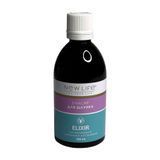
Hondroflor is a comprehensive formula that combines glucosamine sulfate and chondroitin sulfate in a bioavailable form together with MSM (methylsulfonylmethane—an organic sulfur compound that supports connective tissue synthesis and helps reduce stiffness and discomfort) and boswellia extract. Such a complex is appropriate both for preventive courses (especially with age or physical load) and as part of long-term recovery programs
3. External Local Care. Oral intake takes time to build up, whereas topical products act directly in the area under load—helping stimulate local blood flow, relieve muscle tension around the joint, and improve mobility "right here and now".
-
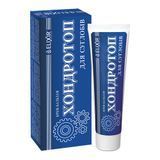
Hondrogel is a topical gel combining glucosamine, chondroitin, and a blend of 39 plant extracts. Specialists and massage therapists value it for being suitable not only in areas of acute discomfort, but also preventively—on large joints and along the spine.
How to apply for best results:
-
Boosting microcirculation: apply the gel with light massaging movements for several minutes to stimulate local blood flow.
-
Combining in programs: when needed, the product can be paired with carrier ointments (universal or joint ointments spaced 10–15 minutes apart) or combined with a phytoanalgesic for local muscle overstrain.
Ultimately, caring for your joints is an investment in freedom of movement, activity, and quality of life for years to come. The best time to start is not when sharp pain hits, but in advance—by combining thoughtful herbal support, care for digestion, and sensible daily movement.
Scientific Basis of this Article:
About the Author:
Vira Norenko is a nutritionist with a medical background, and valeologist with over 10 years of experience. She specializes in integrative nutrition and restoring the body through plant-based supplements and diet.
This article was prepared by a specialist with a medical background for educational purposes. The information provided is not a substitute for professional medical advice.